

Vitamin C skincare routines can give you a natural, dewy glow thanks to their potent antioxidant qualities. This vitamin isn’t just wonderful on its own, either. You can pair vitamin C with moisturizing sunscreen for the ultimate protection and natural buffer against UV damage. But just like choosing the right products matters, knowing how to apply them to maximize their benefits is equally important.
In this guide, we’ll explore how using vitamin C skincare products with sunscreen can help enhance your complexion and give you a fresh, natural glow all year long.
Table of Contents
The Basic Formula for Pairing Vitamin C Products With Sunscreen
Vitamin C is an antioxidant that boosts your skin’s protection against sun damage. It can fight off environmental stressors caused by pollution and target discoloration by inhibiting the enzyme tyrosinase.
How Vitamin C Works Against Sun Damage
Tyrosinase is like the master on-switch for melanin production; melanin is what gives skin cells color or pigmentation. Tyrosinase can either lead to the development of dark or red skin discoloration. However, vitamin C can reduce dark spots by swooping in and acting as a shield. It can essentially kick off a chemical rewind that forces the melanin-production process backward, which can help soften those sun damage spots over time.
Pairing Vitamin C With Sunscreen
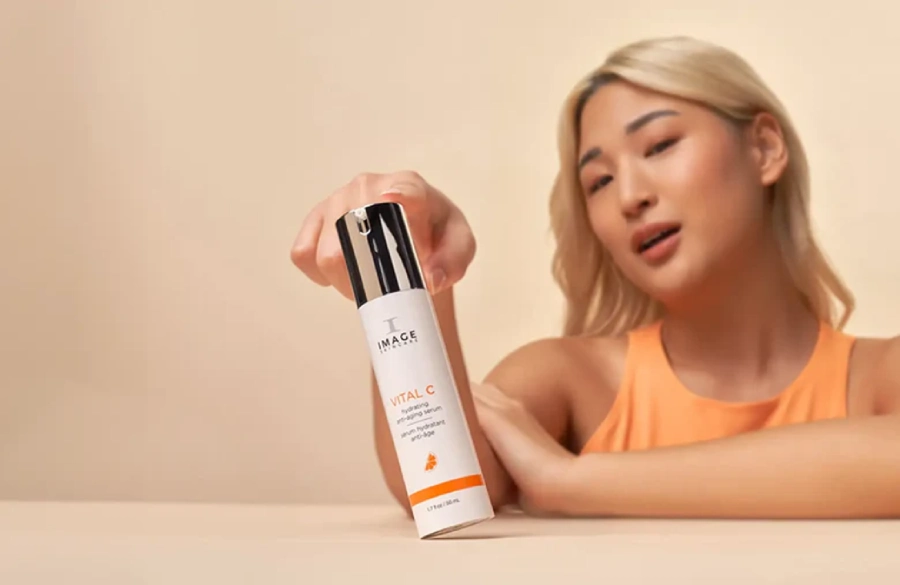 It’s generally best to apply your vitamin C products before sunscreen. This helps maximize absorption to protect the skin while your follow-up sunscreen creates a protective layer that blocks UV rays.
As for what vitamin C product to use, there are many options. However, the best choice is a light serum like those within the IMAGE MD Vitamin C collection, because they easily apply to the skin and absorb quickly. This ensure that the product doesn’t create too thick of a layer when paired with sunscreen.
After Sun Exposure
You aren’t limited to using vitamin C in your skincare routine before heading outside. You can also follow up after you’ve come home by washing with a vitamin C facial cleanser and applying a hydrating repair cream or moisturizer.
Using vitamin C both before and after time outdoors doubles your protection against accelerated aging and skin damage, such as fine lines and spots. It doesn’t matter what time of day you apply it, either. Vitamin C is always good for your skin.
Choosing the Right Sunscreen
Always choose a broad-spectrum sunscreen, which means it’s formulated to protect against both types of harmful UV rays. UVA rays cause aging while UVB rays cause your skin to burn. Some sunscreens only target one type, which is why you may find them less effective, even when you apply them generously.
You’ll also want to ensure your sunscreen has an SPF rating of at least 30, though SPF 50 is even stronger. SPF stands for “sun protection factor,” and it measures how well a product can work against UV rays. A minimum SPF of 30 helps avoid premature collagen breakdown, which accelerates aging.
When you increase SPF to 50, you get even better protection. It blocks up to 98% of UV rays, and dermatologists often recommend it for people with sensitive skin or conditions like melasma and vitiligo.
Enhanced coverage means a lower risk of premature aging, discoloration and skin cancer. One thing to note is that SPF 50 sunscreens can feel thicker than SPF 30 products, so you’ll want to pair them with light skincare formulas, like hydrating serums, rather than lotions or creams.
Too many heavy skincare products overwhelm the skin’s outermost layer, which negatively affects absorption. You may also find the products clump together and ball up. This can also lead to clogged pores and breakouts, so remember that you only need a few quality products to take good care of your skin.
Best Practices for Skin Sun Protection
If you want to get the most out of your skincare routine, you can’t skip sunscreen. One thing you have to always remember is that it should go last because you want it to be your skin’s first line of defense against UV rays.
A moisturizing sunscreen is even better because it helps hydrate your skin. If you often notice dryness or flakiness after spending time outdoors, hydrating moisture can be a refreshing way to restore your skin. You might also notice some products include vitamin C as part of their formula, which can further enhance your sun protection.
Cleanse Before Application
 Washing your face before applying sunscreen removes any oils and residue from other products. Even if you’ve just woken up, cleanse your face to clear your pores and prep the surface for sunscreen.
When you’re layering vitamin C, you want your face completely clear before adding a serum. Then, you’ll follow up with a layer of moisturizer before adding sunscreen to “lock in” your vitamin C and form a protective film against UV rays.
Source: DavideAngelini/Shutterstock.com
Use a Small Amount
You only need about a half-teaspoon size of sunscreen to cover your face, ears and neck. Avoid applying a large amount that you can’t easily rub in; larger amounts of product don’t mean better coverage. Instead, you want a thin layer.
Reapply Frequently
Most sunscreens need to be reapplied every two to three hours; follow the instructions on your product’s packaging. There’s no need to worry about washing your face in between applications, but wiping your face with a gentle cleansing wipe is a good idea to remove sweat and moisture.
Designing a Sun-Fighting Skincare Routine
There are only three steps you need to remember for an effective skincare routine: cleanse, moisturize and protect. While there are many products you can add, vitamin C and sunscreen are essentials you shouldn’t overlook or underestimate.
While a rich vitamin C serum can brighten and enhance your complexion, sunscreen protects your skin from damage that’s hard to undo. When you’re exposed to UV rays, the added vitamin C will kick in to fight off melanin production and keep your skin healthy and refreshed.