
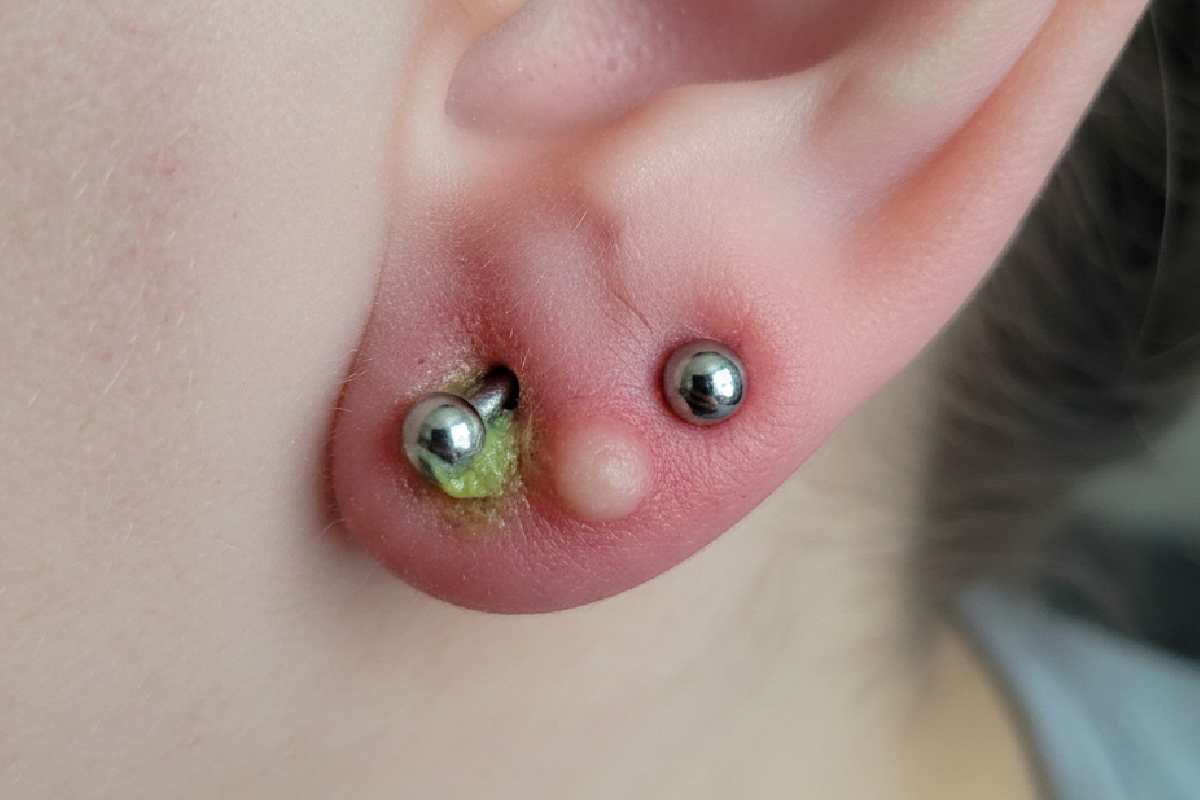
An infected ear piercing can cause redness, swelling, pain, warmth, discharge, and sometimes fever. Mild infections often improve with proper cleaning and saline care, but severe infections—especially in cartilage piercings—require medical attention. Early treatment prevents complications and scarring. This guide explains how to identify infection, treat it safely, and prevent it in the future.
Table of Contents
What Is an Infected Ear Piercing?
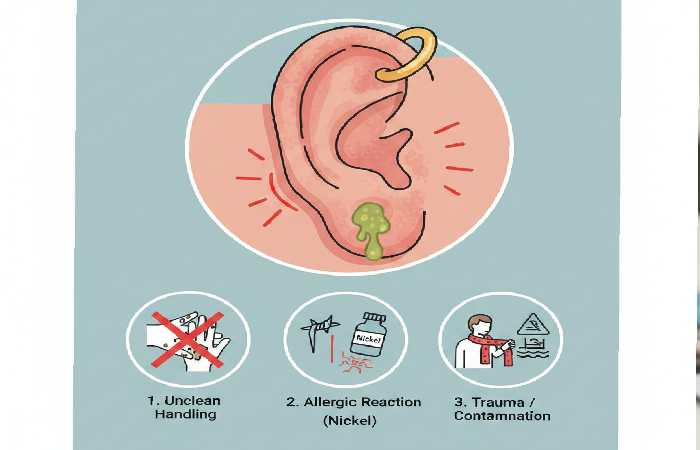
An infected ear piercing occurs when bacteria enter the piercing site during or after the procedure. This can happen due to:
- Improper sterilization
- Touching with unwashed hands
- Removing jewelry too early
- Using low-quality or reactive metals
- Swimming in contaminated water during healing
According to health authorities like the Centers for Disease Control and Prevention (CDC), minor skin infections are common when the protective barrier is disrupted—such as during piercing.
Normal Healing vs. Infection: How to Tell the Difference
It’s normal to experience mild swelling and tenderness for a few days after piercing. However, infection symptoms persist or worsen.
| Category | Normal Healing | Infection | Typical Costs & Resource Links |
| Timeframe | Weeks (earlobe) or Months (cartilage) | Persistent or increasing over time | Ear piercings usually take ~6–8 weeks to heal before infection risk drops significantly. |
| Pain | Mild tenderness or itching | Moderate to severe, throbbing pain | Pain that intensifies over time suggests infection. |
| Redness | Slight around site only | Deep or spreading redness | Spreading redness is a classic sign of infection. |
| Discharge | Clear or light crusting | Thick yellow/green pus | Pus discharge is a strong sign of infection. |
| Swelling | Mild, decreases over time | Worsens or spreads | Increasing swelling warrants evaluation. |
| Warmth | Slight warmth sometimes | Warm or hot to touch | Warmth beyond slight can indicate infection. |
| Fever/Illness | None | May occur in serious cases | Fever + local symptoms often mean infection beyond mild. |
| Home Care Suitability | Yes | Only for mild infections initially | Most minor infections can start with saline/Rx ointment at home. |
| Antibiotics Needed | Rare | Common for moderate/severe cases | Doctor-prescribed antibiotics may be required. |
| Doctor / ENT Visit Cost (India) | Optional for reassurance | Recommended for moderate/severe | Typical private clinic consultation ~₹500–₹2,000; antibiotics course ~₹100–₹500. |
| Minor Abscess Drainage (India) | N/A | ₹5,000–₹15,000 | If infection forms an abscess, minor incision & drainage may be needed. |
| Specialist/ENT Surgical Procedures | N/A | ₹7,000–₹35,000+ | If infection spreads or complications occur (like deep tissue involvement), ENT procedures like myringotomy range: ₹7,000–₹35,000+ depending on facility. |
Cartilage piercings (upper ear) are higher risk because they have less blood supply, making infections harder to treat.
Common Causes of Ear Piercing Infection
| Cause | Why It Increases Risk |
| Poor hygiene | Bacteria enter open wound |
| Nickel jewelry | Triggers allergic reactions |
| Touching or twisting excessively | Irritates and delays healing |
| Swimming pools/lakes | Exposure to bacteria |
| Tight earrings | Traps moisture and bacteria |
Low-quality metals can trigger allergic reactions that mimic infection. Hypoallergenic options like surgical steel, titanium, or gold reduce risk.
Step-by-Step: How to Treat a Mild Infected Ear Piercing at Home
| Step | What to Do | Why It Helps | Trusted Resource |
| 1. Wash Your Hands First | Wash thoroughly with soap and warm water before touching the piercing. | Prevents transferring new bacteria into the wound. | Centers for Disease Control and Prevention – Handwashing guidance: https://www.cdc.gov/handwashing/ |
| 2. Clean With Sterile Saline | Use store-bought sterile saline or make a solution (½ tsp non-iodized salt in 1 cup warm distilled water). Apply with sterile gauze. | Saline gently flushes bacteria without damaging healing tissue. | Mayo Clinic – Piercing aftercare basics: https://www.mayoclinic.org/ |
| 3. Avoid Alcohol & Hydrogen Peroxide | Do NOT apply rubbing alcohol or peroxide. | These irritate tissue and delay healing. | American Academy of Dermatology – Wound care advice: https://www.aad.org/ |
| 4. Apply Warm Compress | Hold a clean warm (not hot) compress against the area for 5–10 minutes. | Improves circulation and supports natural drainage. | Cleveland Clinic – Minor infection care: https://my.clevelandclinic.org/ |
| 5. Do NOT Remove Jewelry | Keep the earring in place unless a doctor advises removal. | Removing it can trap infection inside and worsen swelling. | Healthline – Infected piercing guide: https://www.healthline.com/ |
| 6. Use Topical Antibiotic (If Mild) | Apply a thin layer of over-the-counter antibiotic ointment if redness is mild. | Helps control minor surface bacterial infection. | MedlinePlus – Minor wound care: https://medlineplus.gov/ |
| 7. Monitor for 48 Hours | Watch for spreading redness, worsening pain, pus, or fever. | Worsening symptoms may require prescription antibiotics. | National Health Service – When to seek medical help: https://www.nhs.uk/ |
When to See a Doctor
Seek medical care if:
- Symptoms worsen after 48 hours
- Fever develops
- Infection spreads beyond piercing site
- Cartilage piercing is involved
- Severe swelling or intense pain occurs
Doctors may prescribe topical or oral antibiotics depending on severity.
Cartilage Piercing Infections: Why They’re More Serious
| Feature / Factor | Cartilage Piercing | Earlobe Piercing | Why It Matters |
| Blood Supply | Poor/limited | Rich | Cartilage has less circulation, so immune cells and antibiotics reach infections slower, making them harder to fight. |
| Healing Time | Long (months) | Short (weeks) | Poor blood flow prolongs healing and allows bacteria more time to cause damage. |
| Common Severe Infection | Perichondritis / chondritis | Superficial skin infection | Cartilage infections often involve deeper tissue (perichondrium), which can lead to abscess and deeper damage. |
| Risk of Deformity | High (e.g., cauliflower ear) | Low | Untreated cartilage infection can cause cartilage necrosis and permanent ear deformity. |
| Typical Pathogens | Pseudomonas aeruginosa, Staph. aureus | Mostly skin bacteria | Water-borne bacteria like Pseudomonas are common in cartilage infections and harder to eradicate. |
| Complication Severity | Severe – abscess, necrosis, scarring | Mild – usually superficial | Cartilage infections often require antibiotics or surgery; earlobe infections are frequently treatable with home care or simple antibiotics. |
| Treatment Complexity | Often medical intervention needed | Often easy home care plus antibiotics | Cartilage infections often need oral/IV antibiotics and possibly drainage; earlobe infections rarely need aggressive treatment. |
| Long-Term Cosmetic Risk | High | Low | Permanent ear shape changes (cauliflower ear) are common with cartilage infection; very rare in earlobe cases. |
Healing Time for Ear Piercings
| Piercing Type | Average Healing Time |
| Earlobe | 6–8 weeks |
| Cartilage | 3–6 months |
| Industrial/complex | 6–12 months |
Infections may extend healing time significantly.
Can You Treat an Infected Ear Piercing With Antibiotic Cream?
Topical antibiotic ointments may help minor surface infections. However:
- Overuse can cause resistance
- Thick ointments may block airflow
- Severe infections require oral antibiotics
Always consult a healthcare professional if unsure.
Best Topical Antimicrobial Ointments for Mild Piercing Area Care
| Product / Ingredient | Typical Use | Why It’s Used | Approx. Price (India) | Trusted Resource |
| Mupirocin 2% Ointment | Prescription topical antibiotic | Targets Staph bacteria common on skin | ₹150–₹400 per tube | MedlinePlus – Mupirocin overview https://medlineplus.gov/druginfo/meds/a608026.html |
| Fucidin (Fusidic Acid) Cream/Ointment | Prescription topical antibiotic | Effective against many Gram-positive skin bacteria | ₹200–₹600 per tube | NHS UK – Fusidic acid guidance https://www.nhs.uk/medicines/fusidic-acid/ |
| Neosporin (Bacitracin + Neomycin + Polymyxin B) | OTC antibiotic ointment (in some countries) | Broad-spectrum topical protection on superficial wounds | ₹120–₹300 (imported products) | Cleveland Clinic – Wound Care https://my.clevelandclinic.org/health/diagnostics/21213-wound-care |
| Bacitracin Ointment | OTC topical antibiotic | Basic topical antibacterial action | ₹60–₹200 | Drugs.com – Bacitracin info https://www.drugs.com/mtm/bacitracin.html |
| Silver Sulfadiazine Cream | Topical antimicrobial used in burns | Broader antimicrobial action; sometimes recommended for high-risk skin wounds | ₹150–₹500 | DermNet NZ – Silver sulfadiazine https://dermnetnz.org/topics/silver-sulfadiazine/ |
| Tea Tree Oil (Diluted) | Natural antimicrobial adjunct | Mild antimicrobial properties when properly diluted; not a substitute for antibiotics | ₹100–₹350 (essential oil) | Healthline – Tea tree oil for skin https://www.healthline.com/health/tea-tree-oil-for-acne |
Complications of Untreated Infection
Ignoring symptoms can lead to:
- Abscess formation
- Scarring
- Keloids
- Cartilage damage
- Blood infection (rare but serious)
Prompt care prevents long-term issues.
How to Prevent Ear Piercing Infections
Before Getting Pierced
- Choose a licensed professional
- Ensure sterile equipment
- Avoid piercing guns for cartilage
Aftercare Tips
- Clean twice daily with saline
- Avoid swimming for at least 2 weeks
- Don’t change jewelry too early
- Use hypoallergenic materials
- Avoid tight earrings
Jewelry Materials: Best & Worst Options
| Material | Safe for New/Healing Piercings? | Pros | Cons / Why It’s Risky | Resources |
| Implant-Grade Titanium (ASTM F-136) | Excellent | Hypoallergenic, nickel-free, lightweight, medical implant grade | Higher cost | Healthline (why titanium) |
| Niobium (Unalloyed) | Excellent | Hypoallergenic, can be anodised for colour | Less common, pricey | Healthline (niobium info) |
| Solid Gold (≥14K, nickel-free) | Yes (if solid) | Classic, safe † | Low carat mixes may contain irritants; plating is risky | Flavor365 gold guide |
| Surgical Stainless Steel (316L/ASTM F-138) | Sometimes | Affordable, durable | Can contain nickel that may irritate sensitive skin | Alibaba piercing metals |
| Platinum | Yes | Hypoallergenic, nickel-free | Very expensive | Leonids Jewelry platinum info |
| Sterling Silver (925) | Not recommended for fresh | Stylish, cheap | Oxidises, can tarnish/irritate; better for healed ears only | Lark & Berry brass warning |
| Gold-Plated / Vermeil / Costume Metals | Avoid | Low upfront cost | Plating wears off, exposes irritating metals like nickel | Lark & Berry plated warning |
| Acrylic / Low-Grade Plastics | For temporary only | Lightweight | Porous, traps bacteria, not ideal for healing | BodyCandy sensitive guide |
Sensitive skin types should prioritize implant-grade titanium.
Special Considerations for Teens and Adults
- Teenagers often experience infection due to frequent touching.
- Adults with diabetes or weakened immunity are at higher risk.
- Children require parental supervision for cleaning.
Individuals with chronic conditions should consult a healthcare provider before piercing.
Ear Piercing Infection Treatments
| Treatment | When It’s Used | How It Helps | Approx. Price (India) | Trusted Resource |
| Saline Soaks (Sterile Saline) | Mild irritation & early swelling | Gently cleanses and soothes infected area | ₹50–₹200 (per pack/bottle) | Mayo Clinic – Aftercare tips https://www.mayoclinic.org/ |
| Warm Compresses | Mild warmth/swelling | Promotes circulation and drainage | ₹0–₹100 (at home) | Cleveland Clinic – Swelling management https://my.clevelandclinic.org/ |
| Topical Antibiotic Ointment (e.g., Mupirocin) | Mild surface infection (doctor recommended) | Kills local bacteria on skin surface | ₹150–₹400 (tube) | MedlinePlus – Antibiotic ointment info https://medlineplus.gov/ |
| Triple Antibiotic Ointment (Bacitracin/Neomycin/Polymyxin B) | Very mild infection/irritation | Broad-spectrum topical protection | ₹120–₹300 | Cleveland Clinic – Minor wound care https://my.clevelandclinic.org/ |
| Oral Antibiotics (e.g., Amoxicillin, Cephalexin) | Moderate or spreading infection | Treats bacteria systemically | ₹200–₹800 (course) | World Health Organization – Antibiotics guidance https://www.who.int/ |
| Antiseptic Cleansers (Chlorhexidine) | Cleansing during healing | Kills bacteria on skin surface | ₹200–₹500 | CDC – Wound infection prevention https://www.cdc.gov/ |
| Pain Relief (Paracetamol/NSAIDs) | Pain & inflammation | Reduces discomfort | ₹30–₹200 (pack) | National Health Service – Pain control https://www.nhs.uk/ |
| Abscess Drainage (Minor Procedure) | Localized abscess due to infection | Removes pocket of infection | ₹3,000–₹15,000 | National Institutes of Health – Abscess treatment overview https://pubmed.ncbi.nlm.nih.gov/ |
| ENT Specialist Consultation (Advanced Care) | Severe or cartilage infections | Expert evaluation and antibiotics | ₹500–₹2,500 per visit | American Academy of Otolaryngology – Ear infection management https://www.entnet.org/ |
Frequently Asked Questions (FAQ)
- How long does an infected ear piercing take to heal?
Mild infections may improve within 3–5 days with proper care. Severe cases can take weeks and may require antibiotics.
- Should I remove my earring if it’s infected?
Usually no. Removing it can trap infection. Only remove under medical guidance.
- Can I use salt water to treat infection?
Yes, sterile saline is recommended for cleaning mild infections.
- Is pus always a sign of infection?
Thick yellow or green pus suggests infection. Clear or light discharge during healing is normal.
- Are cartilage piercings more dangerous?
Yes, due to lower blood supply, infections can become serious quickly.
Final Conclusion
An infected ear piercing is usually manageable when treated early with proper hygiene and saline care. However, cartilage infections or worsening symptoms require immediate medical attention. Choosing high-quality jewelry, maintaining hygiene, and following proper aftercare significantly reduce your risk. When in doubt, consult a healthcare professional to protect both your health and your piercing.