
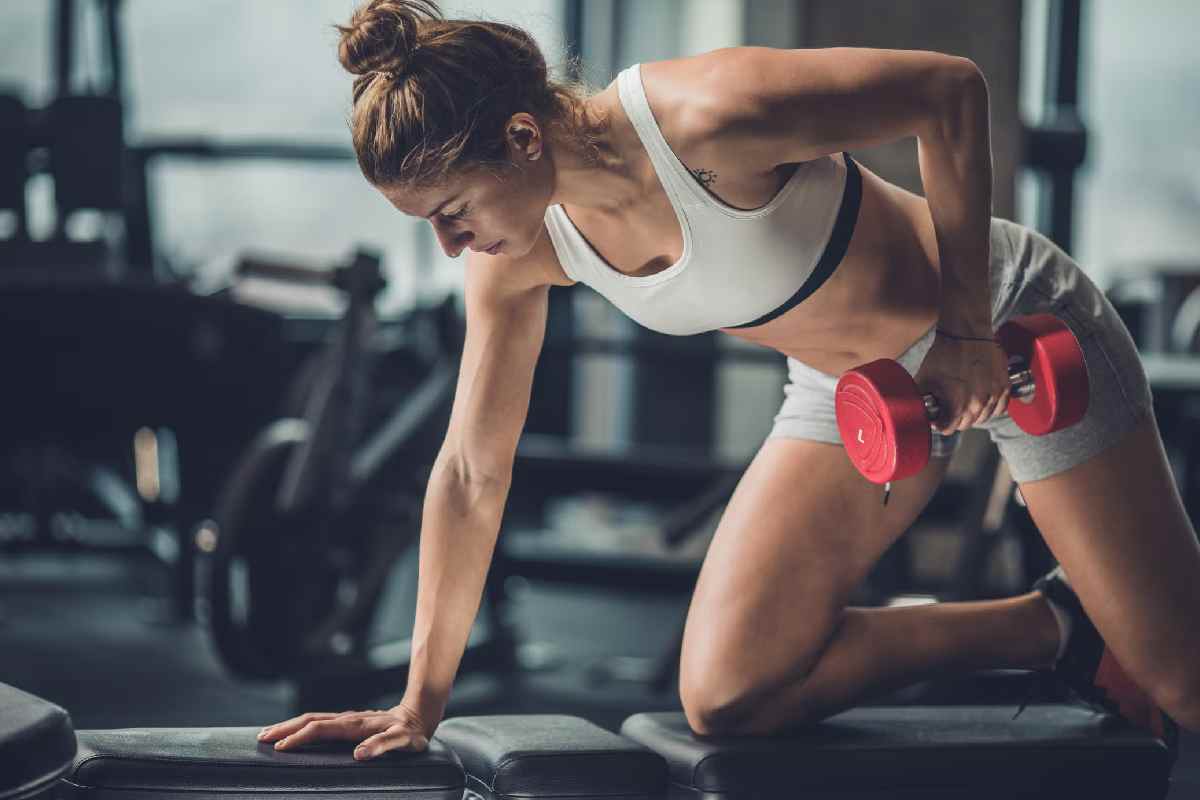


Train Upper Limbs: The female public who look for gyms to perform weight training, whether for weight loss or hypertrophy, prefers to emphasize training the lower limbs. Aiming to develop more thighs and glutes about the upper limbs is normal.
The big mistake is that because they believe they will lose their femininity (myth), women train inefficiently or even do not train upper limbs, a fact that hinders the achievement of better results.
Unfortunately, information like this is passed around and continues to confuse many people, making it difficult for them to progress in training. Therefore, this article addresses seven reasons women should start training their upper limbs with greater intensity to improve their results.
Table of Contents
Train Upper Limbs-Prevents Injuries
For example, strengthening the upper muscle groups is essential to prevent shoulder and spine injuries. For women who practice some sports, it is also necessary to work the upper limbs because, in addition to reducing the risk of injury, they also improve performance.
Because they have a much lower amount of testosterone than men, women can train upper limbs that won’t have the same muscle volume.
Staying consistent with strength training and setting realistic goals are important parts of achieving long-term results, so exploring these tips for your fitness journey can help you stay motivated and focused on your progress.
More excellent Performance In Lower Limb Training
Exercises such as squats, deadlifts, and deadlifts show how weak upper limbs can interfere with lower exercise performance.
Improved Posture
- Weak muscles generate postural imbalances that can create discomfort and pain over time.
- Imagine putting a very high load on the squat and the postural muscles being weak.
- It will undoubtedly generate discomfort and pain, which can even be a factor leading to an injury.
- In this way, it is essential to train the muscles of the dorsal region, for example, to strengthen them and avoid problems that later on can compromise the practitioner’s quality of life.
Along with regular strength training, giving your muscles enough time to recover is equally important for maintaining a balanced routine. You can also explore these natural ways to boost your workout recovery to support muscle recovery and overall fitness.
Train Upper Limbs- Symmetry
- One of the main goals of those who seek aesthetics in bodybuilding is to maintain the proportionality of muscle groups.
- Failing to train upper limbs hinders their muscle development, being counterproductive for those looking for a more harmonic and symmetrical physique.
- Exercises such as bench press, barbell and press are also essential to develop a more symmetrical physique. Of course, they also contribute to greater testosterone secretion, maximizing the process of gaining muscle mass.
Building strength is not just about exercising harder; it is also about following a balanced approach that includes proper planning, consistency, and recovery. Learn why high performers need a smarter fitness strategy to make their workouts more effective and sustainable.
Muscle Tone
- One of the biggest desires for women who train is usually associated with fighting muscle flaccidity in the upper limbs, especially in the triceps region.
- Therefore, this objective will only achieve training the region intensively.
- So, not training “arms” ends up being counterproductive and a hindrance for women who want arms and other upper limbs with more excellent muscle tone.
Improved Bone Mineral Density
- Bodybuilding not only has an aesthetic role, as has been said, but is also very important for people’s health and quality of life.
- One of the benefits of strength training is the improvement of bone mineral density, which is a critical point in preventing fractures and avoiding problems such as osteoporosis, which occur mainly in women.
- Training your upper limbs will make them less susceptible to fractures, making your bones stronger and stronger.
Train Upper Limbs- Functionality
- Often, some common activities in everyday life become more difficult for those who do not exercise. An example is carrying heavier objects.
- However, women who train upper limbs will have greater ease performing them than those who do not qualify.
- With advancing age, it is natural to gradually lose strength and muscle mass, which can negatively affect a person’s quality of life.
Conclusion
Training upper limbs are significant for women and can bring several benefits and even help improve lower limb training. The idea that women become masculinized or get “with the arm of a man” is a repeated myth that many fear because they believe it to be true.
So don’t be afraid to train your upper limbs intensely and achieve better results in training. I remember that the body must work as a whole for better results, and no part must neglect, aiming at greater proportionality and a better quality of life.
In this way, before starting any physical exercise, consult a Physical Education professional, as this is the one indicated to prescribe and guide the training, respecting the objective and needs of each person.
Kashifa Jafar is a beauty, fashion and lifestyle writer at The Beauty Web with 4+ years of experience in content writing and digital publishing. She covers beauty, skincare, hair care, fashion, beauty products and lifestyle topics with a focus on clear, useful and reader-friendly content.
Sameena Begum is a beauty, fashion and lifestyle content reviewer at The Beauty Web with 8 years of editorial experience. She reviews selected content for clarity, readability, organisation, consistency and overall editorial quality.